


Introduction: Understanding the High Blood Pressure (Hypertension) Challenge
Blood pressure or hypertension is a silent killer, which dramatically increases the chances of you heart attack, stroke, and other severe complications. Proper treatment can help to avoid harm in the long term and save your health. Two of the most popular and successful prescription candidates are Verapamil and Amlodipine among the numerous alternatives. Although they both aid in the reduction of blood pressure, they are different drugs that have differing action mechanisms in the body, and thus understanding the difference is most important in their management.
Foundational Knowledge: What is High Blood Pressure?
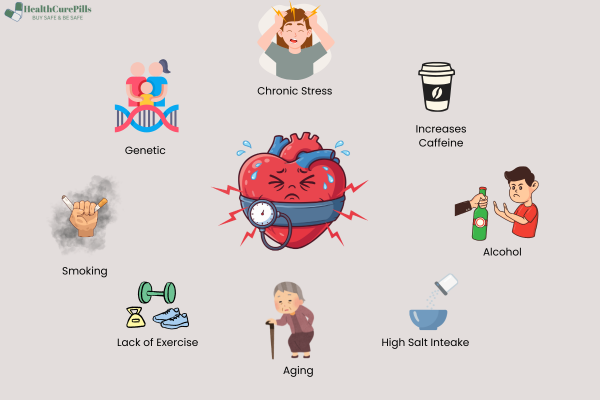
Defining High Blood Pressure
- Blood pressure is a combination of the force of blood against the artery walls, which is outlined as two figures.
- The pressure at the time of the beating of your heart is called systolic(top number).
- Between heartbeats is the pressure, the diastolic (bottom number).
Primary Causes and Risk Factors.
- Lifestyle interventions are significant contributors: eating too much salt increases pressure, arteries are harmed by smoking, and chronic stress may lead to permanent increases.
- There is also the role of genetic predisposition.
- There can be transient increases due to caffeine use, yet it does not cause permanent hypertension.
Key Symptoms and Sensations
- Hypertension is characterised to a great extent as asymptomatic, which qualifies it as the silent killer.
- High pressure is not always felt. Symptoms such as headaches, odd fatigability, or the visualisation of flashing lights are noticeable only in the case of dangerous, extreme spikes.
- In difficult situations, a hypertensive crisis may lead to fainting, and it needs to be attended to.
Mechanisms of Action: How Do These Medications Work?
Similar Objective, Dissimilar Means: Both drugs inhibit calcium channels. This measure dilates blood vessels and decreases the heart workload to decrease blood pressure. Nevertheless, they also affect different channel types in different tissues-this is their major mechanistic difference in terms of the difference in the clinical use.
Amlodipine (Dihydropyridine Class)
- Amlodipine is a selective blocker of calcium channels in smooth muscle cells.
- This suppression does not allow the entry of calcium, which is needed to contract the muscles.
- This causes the relaxation and dilation (vasodilation) of peripheral arteries, which in a large decrease in systemic vascular resistance.
- Reduced resistance enables blood to travel more easily, and this directly reduces blood pressure.
- It has a small direct influence on the heart muscle; hence, the heart rate and contractility do not change much.
- This perioperative measure renders it very useful in hypertension and stable angina.
Verapamil (Non-Dihydropyridine Class)
- It has a direct action of blocking L-type calcium channels in vascular and heart smooth muscle cells. This is its core action.
- This inhibition in the heart lowers calcium influx, thereby decreasing the strength of contraction (contractility) and decreasing the heart rate. This inhibits cardiac workload.
- The decrease in calcium intake in the blood vessels fosters relaxation and expansion of the blood vessels. This reduces peripheral vascular resistance.
- All these reduce blood pressure and address both systemic resistance and cardiac output.
Comparative Insight
- Amlodipine is a calcium channel blocker of the dihydropyridine type. It takes action on peripheral blood vessels mostly, thus leading to potent vasodilation, which reduces blood pressure. It has a small effect on the heart.
- Verapamil is a non-dihydropic. It has a great effect on the blood vessels and heart. It slows down the heartbeat and force of contraction, and acts on the cardiac muscle.
- This is a major difference in terms of mechanics; this is what is behind clinical selection. Amlodipine will be used in basic hypertension, particularly when the heart rate should be maintained. Its cardiac effects are therapeutic in patients who have comorbid supraventricular arrhythmias or angina, in whom a patient may prefer verapamil.
- The use of verapamil in some patients may pose the risk of excessive deceleration of the heart, which is not common with amlodipine.
Primary Uses & Efficacy: Addressing the Issue of High Blood Pressure
- Verapamil is effective in reducing blood pressure and especially in patients with other conditions such as atrial fibrillation or angina.
- Another first-line option, amlodipine, is highly effective and used in most instances when asthma or heart failure issues are noted.
- In conclusion, their choice depends on the specific health of patients and side effects, which makes it patient-specific.
Other Key Medical Uses
- Treats Angina: Verapamil and amlodipine are used to treat chest pain (angina). There is an added advantage of the use of verapamil, where the heart rate is lowered; therefore, the amount of work done by the heart is reduced.
- Preventive of Migraines: Verapamil is an established and proven medication to prevent migraine headaches. Amlodipine is not normally prescribed for this effect.
- Controls Arrhythmias: Verapamil is important in the treatment of certain heart rhythm disorders, especially some supraventricular tachycardias, because of its direct action on cardiac conduction.
Comparison Context
- Amlodipine: This is a dihydropyridine calcium channel blocker (CCB), which is utilised in hypertension, angina and acts primarily on blood vessels at the periphery.
- Contrary to this, Verapamil (non-dihydropyridine CCB) is also effective in the treatment of hypertension, but is a strong agent in the treatment of supraventricular arrhythmias and in migraine prophylaxis because of cardiac nodal activity.
- Another non-dihydropyridine, diltiazem, also has similar uses for arrhythmia but is usually better tolerated in angina compared to verapamil.
- In the meantime, Atenol is a beta-blocker that is used in hypertension, angina, and as a core therapy after a heart attack and acts by lowering heart rate and cardiac output.
Side-by-Side Comparison: Side Effects and Tolerability
- Contrasting Side Effects Amlodipine is also associated with peripheral oedema (limb swelling) and flushing as a result of the mechanism. Verapamil has a higher risk of constipation and may slow the heart rate or increase or decrease the heart rhythm.
- Choice of Tolerability: As such, verapamil may not be tolerated by patients who are likely to experience constipation, and amlodipine may not be the appropriate choice for patients who are worried about observable swelling.
- Common Side Effects: These two drugs may cause dizziness. Importantly, they both interact with grapefruit juice, which is potentially harmful in raising drug levels, and this is particularly strong with verapamil.
- Interaction Alert: Caution with combinations; although drugs such as Xanax (alprazolam) can reduce blood pressure, when they are used along with the calcium channel blockers, they may cause excessive effects, resulting in excessive falls and severe dizziness. It should never be mixed with substances without consulting a doctor.
Critical Considerations for Choosing the Right Medication
Patient-Specific Factors
- Evaluate co-existing conditions. Amlodipine is the preferred treatment for ischemic heart disease patients over verapamil. In the case of a migraine history, offer medications with dual benefit and apply antiarrhythmic capabilities to the corresponding heart rhythm problems.
- Review all the drugs and supplements. The medications, both prescription and over-the-counter, must be examined considering the possibility of their interaction; for instance, verapamil is more likely than amlodipine to cause interaction. Answer patient questions in a straightforward manner, such as telling them that creatine use is not acknowledged as a cause of hypertension.
- Lifestyle and comorbidities are intermingled. Active smoking, chronic stress, and sleep deprivation should all be treated as the principal causes of hypertension and non-responsiveness to medication. These conditions need to be recognised as factors that can be changed and thus included in the treatment plans as risks.
Practicalities
- Pick a dosing schedule that is suitable for you. Verapamil ER provides the option of taking it only once a day, while standard Amlodipine also does so, thus increasing compliance.
- Calculate the costs of medications-brands against generics, since these might differ greatly depending on the pharmacy and the insurance plan.
- Confirm the frequency advised to fit the drug into your lifestyle without any hassle.
Lifestyle Synergy
- To improve heart health, include a diet that consists of foods with a low blood pressure effect, and among them, mushrooms, which are potassium-rich, can be a good choice in this diet.
- Incorporating a commitment to moderate but regular exercise will not only strengthen your cardiovascular system but also create an additive effect with the medication in terms of the latter’s efficiency.
- Stress management is a must, and that includes practising meditation, among other techniques, as chronic stress could be a direct factor leading to the progression of high blood pressure.
FAQs
1. How do Verapamil and Amlodipine lower blood pressure?
Both types of these drugs block the calcium channels in blood vessels and the heart. Verapamil reduces cardiac output (heart rate) and dilates the vessels. Amlodipine’s main action is vasodilation.
2. Which one affects heart rate more?
Verapamil produces a large reduction in heart rate. It is a good choice for patients with tachycardia. Amlodipine’s influence is minimal in this regard.
3. The usual adverse effects of Verapamil are as follows?
Dizziness, constipation, and bradycardia may occur. Also, headaches are a problem. A headache usually comes on suddenly, with pain reaching its peak after 15 minutes to one hour if not treated.
4. What side effects does Amlodipine cause?
Swollen ankles and feet are a common symptom. A few of the patients complain of headache or flushing of the lesional areas on the face. Nausea can happen; however, it is very rare.
5. Can I switch between Verapamil and Amlodipine?
It is your physician who determines it according to your medical situation. First, he/she will rule out any possible drug interactions. Do not adjust drug dosage without informing your doctor.
Conclusion: A Personalised Path to Control
Though both kinds of drugs are efficient, their actions are dissimilar and fit different patients. The very first and most important step is to collaborate with your physician and get a proper diagnosis of why you have high blood pressure. Then, you can work out the right treatment plan for yourself. Do not forget that good control is very much possible by combining the right medicine and healthy lifestyle changes. This active manner of treatment enables you to considerably lower the chances of suffering from heart, kidney, or stroke problems and at the same time, you will be on your own personalised journey to good health.