


Introduction: Understanding the Sleep Tug-of-War
Do you play a sleep tug-of-war? This is the tiring war of combating unexpected drowsiness in the day, then experiencing restless insomnia at night. This cycle tends to lead to Excessive Daytime Sleepiness (EDS), in which case you will wonder why you keep falling asleep at any given moment. This may overwhelm you, but you are not helpless. Simple and regular habits are a strategy that is strong and necessary strategy in regaining control and long-term management of these disruptive symptoms.
The Root Causes: Identifying Specific Sleep Disorders
The pattern of symptoms is a strong indication of the two main sleep disorders. Restless Legs Syndrome causes an uncontrolled desire to move the legs. The Periodic Limb Movement Disorder subsequently occurs, resulting in involuntary and repetitive movement of the limbs when sleeping, which grossly interferes with rest.
Narcolepsy: Uncontrolled Sleep-Wake Cycles
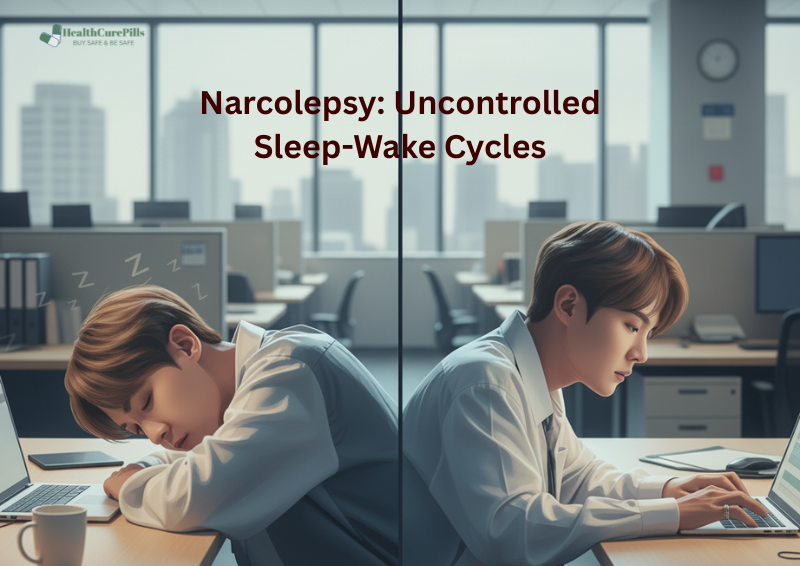
1. What is Narcolepsy?
Narcolepsy is a long-term neurological condition in which the brain becomes unable to control the sleeping and waking process. This causes excessive somnolence and abrupt, uncontrolled episodes of somnolence.
This disorder is caused by the destruction of neurochemicals in the brain that synthesise hypocretin, which is a neurochemical important in keeping one awake and stabilising REM sleep. This deficiency, which is in most cases associated with an autoimmune reaction, results in the typical infiltration of the dream-sleep into the waking state, causing symptoms such as cataplexy.
2. Types and Severity:
- Narcolepsy is a result of an insufficiency of hypocretin, which is a brain chemical that helps to balance the sleep-wakefulness rhythm. It causes sleep attacks, which are not controllable, and persistent drowsiness.
- The disorder is categorised by experts into two types. Narcolepsy type 1 can be characterised by cataplexy, which is muscle weakness due to intense emotions.
- Type 2 Narcolepsy is characterised by all the other core symptoms, and the absence of cataplexy. Narcolepsy can indeed be present without cataplexy, and Type 2 is a little bit less prevalent than Type 1.
- Although the levels do not exist, the intensity of such symptoms as sleep attacks and cataplexy is on a wide scale, and one individual may differ greatly from another.
3. Causes and Symptoms:
It is generally believed by researchers that narcolepsy type 1, which is accompanied by cataplexy, is brought about by a severe lack of a brain chemical, known as hypocretin, which controls wakefulness. This loss can easily be caused by the fact that the immune system wrongfully targets and assaults the neurons producing hypocretin in the brain.
Other major symptoms do not just stop at excessive daytime sleepiness. These are cataplexy, sudden loss of muscle tone caused by strong emotions, vivid hallucinations, or sleep paralysis at the border of sleep. More to the point, narcolepsy does not manifest itself when a person falls asleep immediately, but rather as a constant and overwhelming sleepiness.
Idiopathic hypersomnia is another disorder closely related to sleep disorders because it also involves sleepiness with the disability to overcome the feeling of sleepiness. But it does not have the cataplexy symptoms and abrupt sleep attacks, which are characteristic of narcolepsy.
Sleep Apnea: Obstructed Breathing
1. Obstructive Sleep Apnea (OSA):
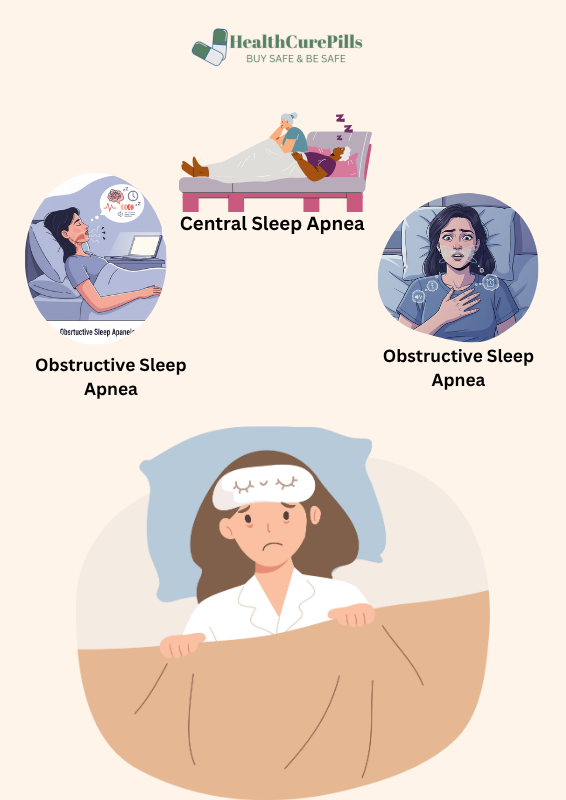
- Obstructive Sleep Apnea (OSA) is a localised sleeping disorder that involves a large-scale contraction of your throat muscles in sleeping, repeatedly falling to block your upper airway.
- This blockage makes you breathe in short intervals, thus depriving your body of oxygen.
- And then your brain will cause a thumping, half-waking awakening with a gasp or a choke to break the sleep, which is highly disorganised.
- OSA is determined by how serious the OSA is, which is calculated by your Apnea-Hypopnea Index (AHI) or the number of breath pauses that you have every hour of sleep.
- Notably, OSA is the prevalent type of sleep apnea and thus the terms are often interchangeable, although other rarer forms of sleep apnea, such as Central Sleep Apnea, also exist
2. Central Sleep Apnea (CSA):
- Central Sleep Apnea (CSA) is essentially the opposite of obstructive sleep apnea, as the brain fails to transmit the correct signals to the breathing muscles.
- This brain disorder develops intermittent stoppage of your breathing process during the night.
- The first aetiology associates CSA with congestive heart failure, and in this case, the accumulation of fluid affects the breathing control of the brain.
- The other causes are stroke, brainstem diseases, and taking some opioid drugs that may interfere with this crucial line of communication.
3. Mixed/Non-Obstructive Sleep Apnea:
Mixed or non-obstructive sleep apnea or central sleep apnea is an apnea that is caused by the inability of the brain to relay the right signals to the muscles that regulate breathing. This neurological problem involves interrupted breathing during the night, unlike the blocked airways that typically occur in most cases of sleep apnea.
Daily Habits and Lifestyle Adjustments for Relief (The “Easy Habits”)
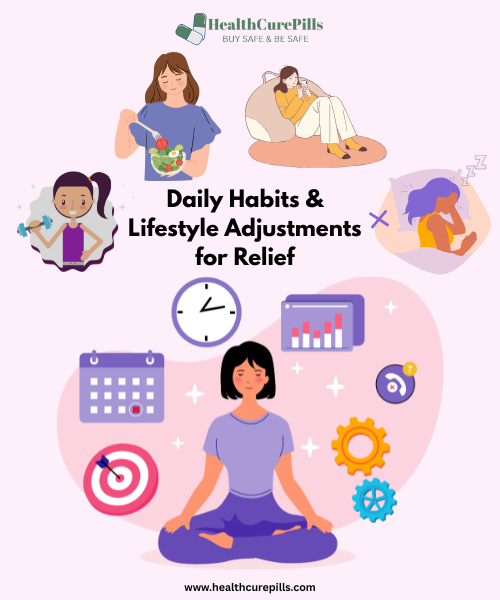
Begin your day with five minutes of soft neck stretches. During the day, deliberately loosen your jaw and shoulders. Set your monitor at eye level and take a quick break every hour to move around, adjust your posture, and release the tension that has been accumulating.
A. The Power of Scheduling and Structure
Conquer EDS by mastering your daily structure. First of all, these are regular sleep and wake times, even on weekends, to control your internal clock. Then, integrate short naps; 15-20 minutes of napping can do wonders in preventing narcoleptic attacks in a scheduled manner and without grogginess afterwards. These habits, on purpose, make you sleep more to gain more restoration.
B. Diet, Exercise, and Weight Management
Exercise by itself cannot “cure” sleep apnea, but it can be regarded as a powerful management tool. Losing weight is one of the benefits of regular physical activity, particularly aerobic exercise, which dries up fat tissue in the throat that can cause airway collapse.
Another positive effect is the reinforcement of your airway. Particular exercises, such as yoga breathing (pranayama) and specific throat exercises, can bring about an increase in muscle tone of the tongue and throat, hence keeping the airway open while sleeping.
Moreover, try to avoid the dietary triggers. Do not drink alcohol, eat heavy meals, or take sedatives before going to bed, as they bring about an excessive relaxation of your throat muscles, which in turn leads to a more severe occurrence of apnea events.
C. Addressing Comorbid Conditions
Develop a relaxing, tech-free pre-sleep routine to soothe your mind and inform your body that it is time to sleep.
Control your weight with healthy eating and routine physical activity – this can directly lead to a decrease in the occurrence of apnea during sleep.
Get mental health matters sorted by doing stress-relieving practices such as mindfulness or mild yoga, which not only help with depression but also sleep-related fears.
Treatment Overviews: What Else Is Available?
Professional treatments provide very strong solutions for a wide variety of conditions. The daily habits mentioned here can be utilised as an addition to the clinical approaches. Consider them as assisting aids that equip your body and mind to reap the maximum benefits from your professional treatment.
A. Sleep Apnea Treatments
Many conditions can be effectively treated through professional treatments. These daily habits, mentioned here, can be used together with the clinical methods. Just consider them as tools that support and make your body and mind ready to receive the maximum benefit from the professional care you get.
B. Narcolepsy Management
Pharmacotherapy is the main instrument in the treatment of narcolepsy. Stimulants are commonly prescribed by doctors to overcome daytime sleepiness, and antidepressants or sodium oxybate to overcome cataplexy to manage core symptoms.
One should know that narcolepsy is a long-term neurological illness; it is not something that goes away. But its symptoms can be well controlled. An integrated methodology of medication and timely napping, adherence to sleep hygiene, and behavioural treatment is the most plausible way to make a meaningful difference in the level of alertness and quality of life daily.
Conclusion: Taking Control of the Tug-of-War
You can control your persistent sleeping disorder and regain your quality of life. It is not in one big move but in a daily routine of doing little things you find easy that make a difference. Put the regularity of sleep first, improve your bedroom atmosphere, and relax before sleep. Such constant work forms a ground for improved rest. Nevertheless, in case of the persistence of the symptoms, there is a fundamental need to consult a professional doctor. Proactively request your doctor to check you on things such as obstructive sleep apnoea to make sure that you get a holistic and effective treatment mechanism.