


Metadol 100mg Tablet
$230.00 – $590.00Price range: $230.00 through $590.00
Cabozantinib 40 mg
$130.00 – $1,299.00Price range: $130.00 through $1,299.00
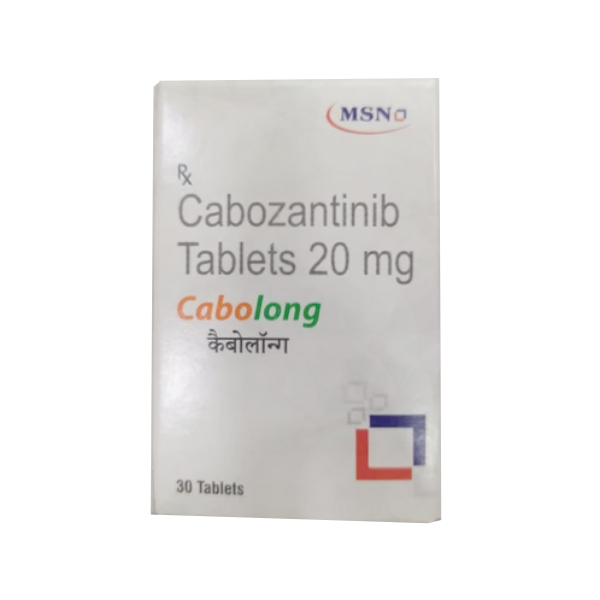
Cabozantinib 20 mg
$90.00 – $899.00Price range: $90.00 through $899.00
Active Ingredient : Cabozantinib
Treatment : Treat a Certain Type Of Thyroid Cancer
Manufacturer : Msn Laboratories Pvt Ltd
Packaging : 30 Tablets In 1 Bottle
Strength : 20 Mg
Description
Introduction
Cabozantinib is an anticancer drug that is prescribed and inhibit various enzymes that cause tumour growth and the development of blood vessels. The paper is a patient-oriented, step-by-step guide that is designed to specifically refer to the Cabozantinib 20 mg dosage form. We are going to discuss what can be done with this very strength, its intended purposes, and possible side effects that you might have. More importantly, this guide will also discuss critical strategies that will assist you in navigating through your treatment safely and successfully as you take Cabozantinib.
What is Cabozantinib and What is it Used For?
Mechanism of Action (Simplified)
Cabozantinib is a targeted medicine in the form of oral therapy, which is a kinase inhibitor used to treat certain advanced cancers. Its operation is active inhibition of several receptor tyrosine kinases, such as MET, VEGFR2, and AXL. By blocking these proteins, cabozantinib has two essential anti-cancer actions: it blocks tumour cell growth and survival directly, and it blocks the development of new blood vessels that supply the tumour (a process known as angiogenesis). This bi-dimensional action is effective in starvation and in the restriction of the spreading ability of the cancer.
Clinical indications of its use include metastatic medullary thyroid cancer, advanced renal cell carcinoma, and hepatocellular carcinoma, which have been previously treated.
Primary Medical Uses (Indications)
Cabozantinib, also known as Cabometyx® or Cometriq®, is a targeted therapy, which is an inhibitor of particular enzymes that help cancer grow and form blood vessels. Speaking of cabozantinib, it is more precisely approved for various advanced cancers.
Its major medical applications are:
- Cabozantinib kidney cancer: It is a conventional management of advanced Renal Cell Carcinoma (RCC), especially in cases of failure after initial therapy.
- Cabozantinib for hepatocellular carcinoma (HCC): It is applied to patients who have undergone prior therapy for this type of liver cancer.
- Cabozantinib thyroid cancer: This is used to treat progressive, metastatic Medullary Thyroid Carcinoma (MTC), which is not the most common type of thyroid cancer.
These uses are generally regarded as off-label, although occasionally they are explored in cabozantinib lung cancer or cabozantinib neuroendocrine tumours.
Special Considerations: Brain Metastases
Cabozitantib is a targeted therapy medication that suppresses several receptor tyrosine kinases (MET, VEGFR2, and AXL). It is acceptable in the treatment of advanced renal cell carcinoma, hepatocellular carcinoma, and differentiated thyroid cancer. Notably, its application is also applicable to brain metastases. Studies show that cabozantinib has an intracranial effect, which can reduce the size of brain tumors and prevent the growth of new tumors. This renders it an effective systemic therapeutic agent in the treatment of cancers that spread to the brain, providing a treatment modality outside of local therapy, such as radiation or surgery for cabozantinib-brain metastases.
Understanding the 20 mg Dosage Form
The Cabozantinib 20 mg Capsule
Cabozantinib 20 mg capsule is an opaque and white to off-white solid. It is in the form of a hard gelatin capsule to be taken orally. This particular dosage form belongs to a series of dose strengths of cabozitaxinib capsules, as they may be administered with a specific dose variation as prescribed by a medical professional. Identifying marks, like XL and 20mg, may also be printed on the capsule itself so as to clearly differentiate it from other strengths. Patients must never doubt that they have been prescribed the right amount of cabozantinib 20 mg and should never question their doctor on how to handle and take it.
Role in Treatment: Starting Dose vs. Adjusted Dose
The cabozantinib 20 mg dosage is the standard maintenance dosage dose however, this is not the standard dose at which treatment commences. In Renal Cell Carcinoma (RCC), the initial dose of cabozantinib is 60mg.
Depending on his/her response, a patient can move down to 20 mg as a long-term treatment. This modification is frequently done to deal with severe side effects to enhance tolerability at the cost of clinical benefit.
Thus, a 20 mg dose is important as an adjusted or maintenance dose enabling the continuation of treatment after the first high-dose period.
Efficacy and Treatment Timeline
Onset of Action
Cabozantinib is fast-acting at the cellular level, which may occur within hours of the first dose.
The drug immediately suppresses certain receptor tyrosine kinases (such as MET, VEGFR, and AXL) that prevent the signals from proliferating and developing new blood vessels used by cancer cells.
Although this process of cellular action begins rapidly, the clinical effect of the observable shrinkage of the tumour on scan is much slower to appear.
These cytotoxic effects take several weeks to months of constant treatment before they build up and lead to the measurable tumour reduction in patients. The response time to this is different in each individual and each type of cancer.
Duration of Treatment
You may also choose to continue taking cabozantinib as long as it is effective and you can manage the side effects. No predetermined time can be given to this therapy.
The drug achieves this by regulating the growth of cancer as well as by inhibiting the development of new blood vessels, which sustain tumours. Its functionality is observed with the help of regular tests and scans.
Finally, cabozantinib has different durations of action. The treatment may be continued until you show a positive clinical response, with your healthcare team periodically reviewing its continued benefit.
Managing Side Effects of Cabozantinib
Overview of Common and Serious Side Effects
Common Side Effects:
Patients often have diarrhoea, feel tired, and experience nausea. Most of them also complain of loss of appetite, reduced weight, and a definite taste alteration. A hand-foot skin reaction, palmar-plantar erythrodesesthesia, might appear, or you may develop a skin rash. Constipation and possible hypertension are other common side effects of cabozitinib.
Serious Side Effects:
Get serious bleeding, gut perforation, or heart issues under medical attention immediately. Watch out when there are complications of wound healing and acute infections. Even in lower dosages, such as cabozantinib 20 mg side effects, these risks do exist and must be constantly checked. Never ignore any severe or unusual symptoms that you are experiencing, and should report them to your oncology team as soon as possible.
Focus Management: Diarrhea
Active diarrhoea is one of the most frequent side effects of cabozantinib that is managed proactively using the following steps. Start changes in diet now, but consume small portions of tasteless foods. Bananas, rice, and toast should be prioritised, whereas spicy foods and greasy foods, as well as foods with high fiber, should be avoided. Most importantly, drink a lot of fluids like water and water with, electrolyte-replenishing beverages to avoid dehydration. You need to reach your healthcare team as soon as possible in the case of diarrhoea more than four times a day, any indications of dehydration (such as feeling dizzy), or any blood in your stool. Never discontinue taking medication unless your physician orders you to do so.
Lifestyle Considerations: Interaction with Alcohol
- Cabozantinib and alcohol should not be used together because the combination might cause severe liver toxicity since both drugs are metabolised by the liver.
- Alcohol can further increase typical side effects of cabozitinib, especially gastrointestinal side effects such as diarrhoea, nausea, and dehydration.
- You are strongly advised not to consume or, at maximum, consume alcohol during your treatment.
- Cabozantinib and alcohol may be used together, though it is always best to ask your doctor about them and for personalised advice, since they are in a position to determine your risks and health condition.
Practical Considerations and Safety
How Long Does Cabozantinib Stay in Your System?
- The half-life of a drug is the time it takes your body to cut the concentration of the drug by 50 per cent.
- The half-life of cabozitinib is about 55 hours.
- It is estimated by clinicians that it may take 5 to 6 half-lives before a drug is almost completely removed from your body.
- Thus, cabozantinib may stay in your system as long as 14 days after your last dose.
- Never forget to give your healthcare providers the information about using cabozantinib, since such information is essential to schedule your operations or other drugs.
Important Administration Instructions
This is to be used on an empty stomach at all times. To optimise its effect, it is good to consume it one or two hours prior to or following a meal.
Take the capsules with a complete glass of water. The capsules should not be crushed, chewed, or broken because this may modify the intended effect of the medicine.
In case you do not get a dose on time, then take it immediately you recall. Nevertheless, when the time when you were to take the next dose is nearly close, just ignore it and resume your normal routine. Do not take a second dose to replace a missed dose.
When to Contact Your Healthcare Team
Immediately get into contact with your healthcare team should you develop any of these red flag symptoms. Consult a doctor immediately in cases of severe diarrhoea, atypical bleeding or bruising, or high fever. In addition, notify about the symptoms of a severe allergic reaction, onset or exacerbation of heart problems such as palpitations or chest pains, and acute and acute dyspnea. Do not wait till your next planned appointment, as these symptoms are to be urgently assessed.
Conclusion
Cabozantinib 20 mg is an essential oral medicine in the treatment of various advanced types of cancer, including renal cell carcinoma and hepatocellular carcinoma. The success depends on how attentive you are to the given regimen every day and whether you are proactive when addressing the side effects. You must communicate such typical problems promptly to your oncology team, such as diarrhoea, fatigue, hand-foot skin reaction, or hypertension. It is important to keep in touch with your providers of healthcare, all the time. They will provide individualised side effect management plans and can focus your dosage accordingly so that you get the best balance between treatment and your quality of life.
Be the first to review “Cabozantinib 20 mg”
Reviews
There are no reviews yet.